
Epoxy Floor Aftercare & Cleaning: How to Keep Your Epoxy Floor Looking New
Epoxy Floor Aftercare Instructions:
A professionally installed epoxy floor is built to handle real life—hot tires, foot traffic, spills, and daily wear. But like any premium surface, the right care routine keeps it looking “just installed” for years.
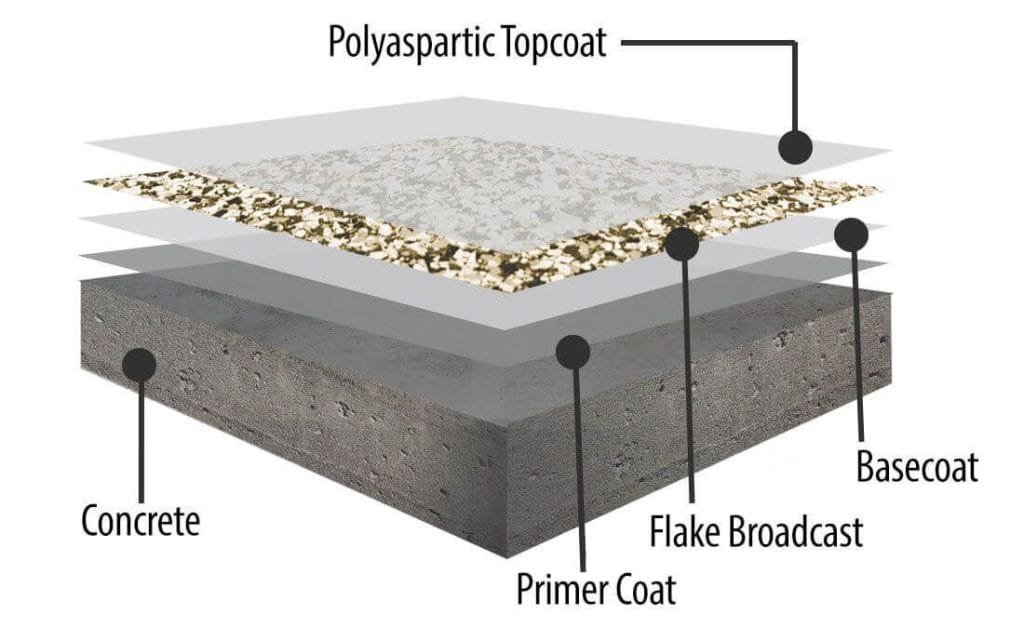
At DMV Epoxy Pro, we build our systems for durability with professional surface prep, an epoxy basecoat, and a protective topcoat. Not sure about proper epoxy floor aftercare? How to prevent epoxy floor scratches? This guide will cover how to clean your epoxy floor, exactly what to do (and what to avoid) after installation, plus simple weekly and seasonal cleaning routines for both flake and metallic epoxy floors.
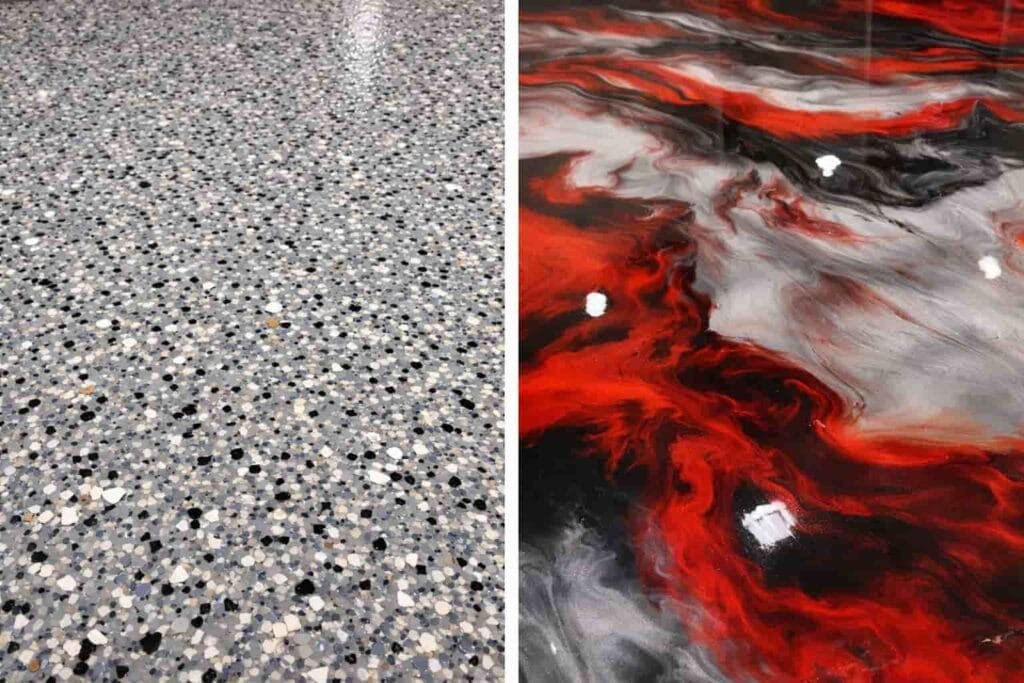
Haven’t decided on which type of epoxy floor coating for your space. See our article on flake vs metallic epoxy floor coatings for more info.
Interested detailed floor coating information for your specific space. See our pages on home garage floor coatings, or a commercial floor coatings.
The First 24–72 Hours: What To Do Right After Installation
Let It Cure Before You Use It
Cure time varies by system and conditions (temperature/humidity), but here are safe guidelines:
Foot traffic: typically 24 hours
Light items: typically 48 hours
Vehicles: typically 72 hours
Full chemical resistance: can take up to 7 days
Your installer should confirm your exact timeline. When in doubt, wait longer—early use is the easiest way to scuff a fresh topcoat.
Keep It Clean While It Cures
During the first few days:
Keep pets off the floor (their nails can mark a new surface)
Avoid dragging boxes, ladders, tool chests, or furniture
Don’t put down rugs or cardboard until fully cured (they can trap moisture)
Epoxy Floor Cleaning Tips (The Simple Way)
Step 1: Dry Dust Mop or Sweep
Dust acts like sandpaper over time. A quick dry pass prevents micro-scratches.
Best tools:
Microfiber dust mop
Soft push broom
Shop vac with a soft floor attachment
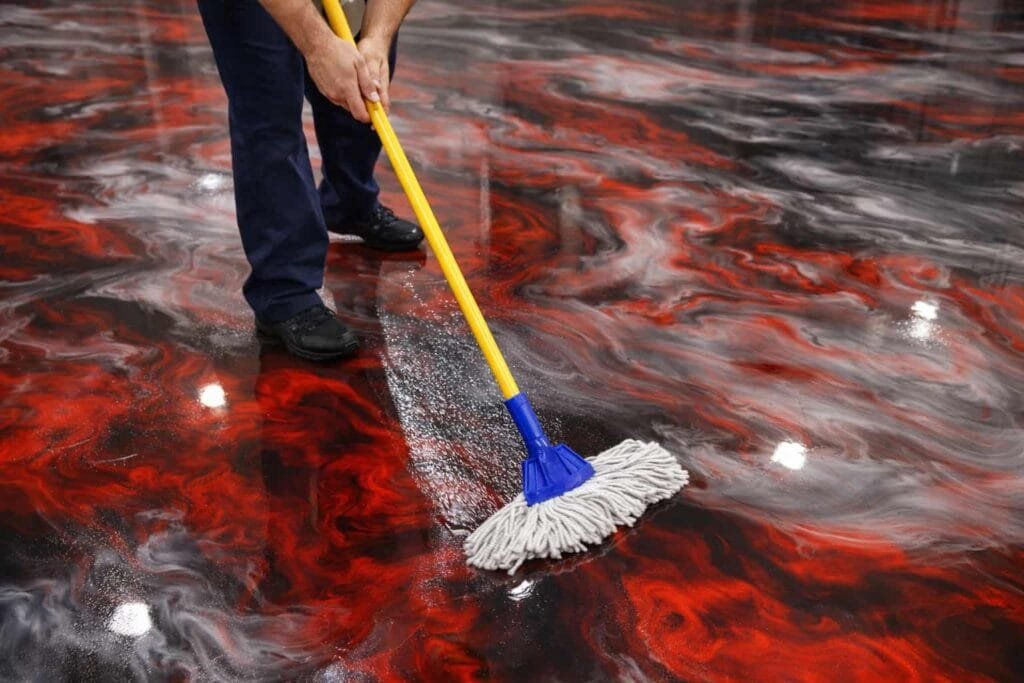
Step 2: Mop With a Gentle Cleaner
Use warm water + a pH-neutral cleaner (or a small amount of mild dish soap). We recommend Zep Neutral Floor Cleaner
Best practice mix:
1–2 gallons warm water
A small amount of gentle, non-citrus cleaner
Microfiber mop (not a string mop that leaves residue)
Step 3: Rinse If Needed
If you used soap or your floor feels “sticky,” do a quick rinse pass with clean water.
Spills & Stains: What To Do Immediately
Epoxy and polyaspartic topcoats resist stains—but fast cleanup keeps the shine perfect.
For everyday spills (water, soda, coffee)
Wipe with a microfiber towel
Mop with mild cleaner if needed
For oil, grease, or automotive fluids
Blot first (don’t smear)
Use a gentle degreaser diluted per label
Rinse thoroughly with clean water
For road salt in winter
Sweep first
Mop with warm water
Rinse to prevent a hazy film from salt residue
What NOT To Use (These Can Dull or Damage the Finish)
Avoid:
Vinegar or acidic cleaners (can dull sheen over time)
Citrus cleaners (can soften or haze some finishes)
Bleach (harsh and unnecessary)
Abrasive powders (Comet, BKF, etc.)
Magic erasers for routine cleaning (they’re micro-abrasive)
Wire brushes or rough scrub pads
If you need extra cleaning power, use a pH-neutral cleaner and a soft scrub pad.
How to Prevent Epoxy Floor Scratches and Scuffs
Use Pads and Wheels That Are Floor-Friendly
Put felt or rubber pads under heavy items
Use soft wheels on rolling tool chests (hard plastic wheels can scuff)
Don’t Drag Heavy Items
Lift instead of dragging:
Tool cabinets
Appliances
Jack stands
Benches
Add a Walk-Off Mat at Entry Points
Especially in winter or rainy seasons. Grit tracked in from outside is one of the biggest sources of dulling.
Use mats with a non-staining backing (avoid rubber-backed mats unless confirmed safe for coated floors).
Tire Marks, Hot Tires, and “Pickup” Concerns
Modern coatings are designed to resist hot tire pickup when installed correctly. To keep the finish crisp:
Keep the floor clean (dust and grit increase scuffing)
Avoid cheap tire shines that can leave residue
If you see light tire marks: use warm water + mild cleaner and a microfiber mop
Aftercare for Flake Floors vs Metallic Floors
Flake Epoxy Floors
Flake systems are forgiving and hide dust well. Cleaning is straightforward:
Dust mop weekly
Mop as needed
Rinse when dealing with salt or heavy grime
Metallic Epoxy Floors
Metallic floors are glossy and show dust sooner (like a nice car).
Dust mop more frequently (quick passes)
Use microfiber mops only
Avoid harsh cleaners to protect the mirror-like finish
Deep Cleaning: Monthly / Seasonal Refresh
If your floor looks slightly dull, it’s usually residue—not damage.
Easy deep clean steps
Sweep/vacuum thoroughly
Mop with a pH-neutral cleaner (slightly stronger dilution)
Rinse with clean water
Dry with microfiber towels or let air dry
For larger garages, a soft-bristle floor scrubber is great—just avoid aggressive brushes.
Can You Wax or Polish an Epoxy Floor?
Most professionally topcoated epoxy floors do not need wax. Wax can:
attract dirt
create buildup
change the look/traction
If you want extra gloss or protection, ask about a compatible maintenance coating designed for your topcoat type (epoxy/polyaspartic).
When to Call a Pro: Signs Your Floor Needs Service
Reach out if you notice:
peeling or flaking edges
recurring bubbles
deep gouges
haze that won’t clean off (could be chemical residue or abrasion)
In many cases, a light screening and re-topcoat can refresh the floor without starting over.
Keep Your Floor Looking New for Years
A great epoxy floor should be easy to live with. The biggest keys are:
Keep grit off the surface
Use gentle cleaners
Clean salt and automotive fluids promptly
Don’t drag heavy items
If you have questions about aftercare for your specific floor (flake vs metallic, garage vs basement), DMV Epoxy Pro is happy to help—just reach out and we’ll recommend the best cleaning approach for your finish.